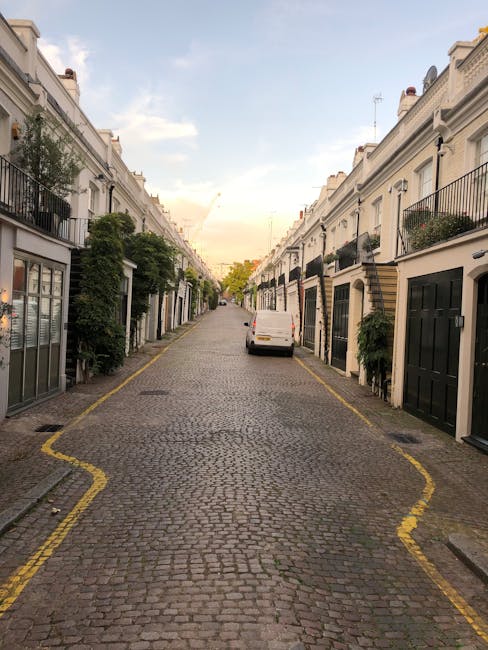
Mews access common problems for Marylebone gardeners
Working in Marylebone sounds elegant from the outside, and often it is. But anyone who has tried to move tools, bags of compost, a mower, or a hedge trimmer through a narrow mews entrance knows the reality can be a bit less graceful. Mews access common problems for Marylebone gardeners show up in all sorts of small, stubborn ways: tight gates, awkward parking, shared courtyards, limited turning space, and residents who quite rightly want quiet, tidy work with as little disruption as possible.
If you are planning garden maintenance, clearance, or a full redesign in a mews property, understanding these access issues early can save time, money, and a fair amount of frustration. In this guide, we will look at what usually goes wrong, why it matters, and how to handle it properly without overcomplicating things. It is practical, local, and based on the sort of day-to-day problems that really happen in central London.
Why Mews access common problems for Marylebone gardeners Matters
In Marylebone, many gardens sit behind terraces, through shared archways, or down compact mews lanes where access is more about logistics than landscaping. That matters because a garden job is rarely just about the plants. It is also about how workers get in, how waste gets out, where tools are stored during the visit, and whether the neighbours can still get their cars, bins, or deliveries through without a fuss.
Access problems can make a straightforward job feel complicated. A simple lawn tidy-up may turn into a two-person carry operation. A hedge trim might need more time because ladders cannot be positioned safely. A garden clearance could require multiple trips if the entrance is too narrow for wheelbarrows or larger waste loads. None of this is dramatic, but it does affect the outcome.
Let's face it: in a mews, the first challenge is often not the garden itself. It is the route to the garden. And once access is difficult, everything else becomes a bit more sensitive - timing, noise, safety, even how tidy the team can keep the work area as they go.
Expert summary: In mews settings, good gardening work depends just as much on access planning as on horticultural skill. The best results usually come from clear preparation, realistic timing, and a method that suits the property rather than forcing the property to suit the job.
How Mews access common problems for Marylebone gardeners Works
The phrase may sound technical, but the idea is simple. Every Marylebone mews property has its own access pattern, and gardeners need to work around it. Some jobs are easy to hand-carry. Others need staged deliveries, smaller tools, or a plan for waste removal before work starts. If access is not thought through properly, the job slows down and the risk of mistakes rises.
Common access patterns include front-to-back passageways, shared side entrances, basement steps, gated courtyards, and narrow service lanes. You may also find that parking is distant, loading is awkward, or there is only a small window in which work can happen. That is normal in central London. Not ideal, but normal.
The process usually works best in three parts:
- Identify the access route. Measure the gate, passage, and turning points before the visit if possible.
- Match the work to the route. Choose tools, materials, and staffing levels that fit the space.
- Plan the movement of waste and materials. Decide how soil, branches, cuttings, timber, and equipment will be moved without blocking the mews.
That might sound like overkill for a bit of pruning, but in practice it prevents a lot of awkwardness. I have seen crews lose twenty minutes just trying to get a bulky bag through a narrow entrance. Twenty minutes here, fifteen there, and suddenly the whole day feels stretched.
Key Benefits and Practical Advantages
When mews access is planned well, the benefits go beyond convenience. The work tends to be tidier, safer, and less disruptive for everyone involved. That is good for the gardener, obviously, but it is also good for residents who do not want repeated foot traffic or muddy footprints across shared paving.
- Less disruption: Better access planning reduces the amount of back-and-forth through shared areas.
- Cleaner working conditions: Materials can be staged more neatly, which helps keep entrances and pathways clear.
- Safer handling: Smaller tools or adapted methods lower the chance of trips, strains, and accidental damage.
- More accurate quotes: A realistic understanding of access helps avoid nasty surprises on the day.
- Better neighbour relations: People are more patient when work feels organised and respectful.
There is also a quieter benefit that experienced homeowners often appreciate: access planning makes it easier to maintain the garden regularly rather than letting it drift into a larger, more expensive mess. A difficult entrance is annoying. An overgrown garden behind that entrance is worse.
If your project involves a wider refresh, it can also help to review broader options such as the full services overview, especially if you are comparing routine maintenance with one-off clearance or more substantial landscaping.
Who This Is For and When It Makes Sense
This topic matters to a fairly wide group of people, but especially to those managing gardens in mews streets, courtyard homes, and tucked-away properties around Marylebone. If you own, rent, manage, or maintain one of these spaces, you will probably recognise at least one of the issues discussed here.
It makes sense to think about access problems if you are:
- booking regular garden maintenance for a mews property
- planning hedge trimming, pruning, or seasonal tidy-ups
- arranging a garden clearance after a busy growing season
- considering landscaping or layout changes that require materials to be carried in manually
- dealing with a shared entrance, private lane, or communal access arrangement
- trying to keep disruption low for residents or tenants
It is also relevant if you are comparing services. A team with experience of garden maintenance in constrained spaces will usually approach the job differently from a team that mainly works in open, suburban gardens. That difference can be surprisingly important.
And yes, a little patience goes a long way. A mews property is not the place for rushed assumptions.
Step-by-Step Guidance
If you want to reduce access-related headaches, a sensible process is better than hoping things will somehow work out on the day. Here is a straightforward approach that tends to hold up well in real life.
- Walk the access route first. Look at gates, latches, steps, surfaces, widths, and any low-overhead obstacles.
- Note practical limits. Can a wheelbarrow pass through? Is there space to turn? Is there room to park briefly for loading?
- Identify sensitive points. Shared paving, historic brickwork, glass panels, and painted doors all need care.
- Plan the work in stages. Break the job into easier sections so waste and tools do not pile up in one place.
- Choose the right service scope. A light tidy, hedge trim, or lawn mowing visit may be enough, or you may need a larger clearance first.
- Confirm the disposal route. Decide how clippings, branches, and waste will leave the site without blocking access for others.
- Build in a time buffer. Access jobs nearly always take longer than people expect. Not always by much, but enough to matter.
One small but useful habit: share a photo of the entrance before the appointment if asked. A few pictures of the gate, lane, and garden doorway can help a team arrive better prepared. It sounds minor. It is not minor, really.
Expert Tips for Better Results
Most access problems are manageable if you think like a gardener and a site planner at the same time. That is the sweet spot. Here are the things that usually make the biggest difference.
1. Keep the work area simple
In a tight mews, less clutter is better. Store tools in one place, keep open bags to a minimum, and avoid spreading materials across the whole garden. A tidy footprint protects surfaces and gives everyone room to breathe.
2. Use smaller, handier equipment when needed
A compact mower, foldable tools, or shorter handled equipment can be more effective than heavy-duty kit that is hard to manoeuvre. Bigger is not always better. Truth be told, in a narrow entrance it can be a nuisance.
3. Time the job thoughtfully
Morning deliveries, school-run traffic, and neighbour access can all affect the best start time. If a route is especially tight, a quieter period may reduce stress for everyone. You can hear when a mews is busy; the echo changes, and suddenly every trolley wheel seems louder.
4. Think about waste before you start cutting
If a hedge or shrub produces more waste than expected, the garden can become blocked fast. That is where hedge trimming or broader clearance work may need a cleaner sequence, with waste bags staged so they do not sit in the way.
5. Respect shared spaces
Mews properties often involve people sharing entrances, paths, or parking arrangements. A little courtesy helps a lot. Clear communication, protective coverings where sensible, and prompt clean-up all go a long way.
If you are dealing with an older garden that has simply got out of hand, consider whether a more substantial reset is needed first. A proper garden clearance can sometimes solve the access problem as well as the gardening problem, because a less congested space is easier to move around in.
Common Mistakes to Avoid
The most common mistake is assuming the job will be easy because the garden itself looks small. Small does not always mean simple. In mews settings, one awkward doorway can change the whole plan.
- Not checking the access width properly: A gate that looks "fine" from the street can still be too tight for practical movement.
- Ignoring shared access rules: If other residents rely on the same passage, you need to work around that carefully.
- Overloading the team with too much kit: Carrying unnecessary tools through a narrow route slows everything down.
- Starting without a waste plan: Green waste, soil, and broken materials all need a removal route from the outset.
- Underestimating noise and timing: A hedge cutter in a quiet mews can feel much louder than expected.
- Skipping surface protection: Brick paths, painted steps, and decorative decking can be damaged by dragged equipment.
There is also a subtle mistake that people make when they are eager to get going: they assume access problems can be solved "on the fly". Sometimes they can. Often, that just means improvising in a confined space, which is not especially smart. Better to pause, think, and proceed properly.
Tools, Resources and Recommendations
You do not need a huge toolkit to deal with mews access issues, but you do need the right kind of kit. Practicality matters more than ambition here.
| Approach | Best for | Strengths | Limitations |
|---|---|---|---|
| Compact hand tools | Small beds, pruning, light maintenance | Easy to carry, low disruption, precise work | Slower on larger jobs |
| Standard garden equipment | Average access properties | Efficient and familiar | May be awkward in tight lanes |
| Staged material handling | Clearances and larger maintenance visits | Reduces blockages and clutter | Needs more planning |
| Two-person carry method | Bulky waste, awkward items, delicate areas | Safer and more controlled | Can increase labour time |
For London homeowners, a practical recommendation is to choose services that are set up for access-sensitive work rather than assuming any garden contractor will do. If your project includes slopes, steps, awkward thresholds, or structural changes, it may also be worth looking at landscaping support rather than treating it as a quick maintenance visit.
And if the issue is more about hard surfaces, retained levels, or integrating seating and paths, then decking services can be relevant too, particularly where movement through the garden needs to feel smoother and more deliberate.
Useful local resources are often less about a specific tool and more about good site information: photos, measurements, access notes, and clear instructions. Very old-school, perhaps. Still works.
Law, Compliance, Standards, or Best Practice
For mews access jobs, the main concern is usually not a single legal rule but a bundle of practical duties: keep people safe, do not cause avoidable damage, and respect shared access. That applies whether the work is a simple trim or a more involved clearance.
In the UK, good practice for this type of work generally includes sensible manual handling, safe tool use, clear communication, and appropriate public liability cover. If a contractor is moving heavy loads through narrow space, they should be thinking about injury prevention and trip hazards rather than just speed. That is basic, but it matters.
If you are hiring help, it is reasonable to ask about insurance and safety, especially where shared access, fragile surfaces, or neighbouring property could be affected. You should also expect transparent terms, clear payment arrangements, and a straightforward complaint route if something goes wrong. The relevant company pages on terms and conditions, payment and security, and the complaints procedure are useful starting points for understanding how a provider works.
Accessibility is another part of the picture. Even though mews access challenges are not the same as formal accessibility needs, both raise the same question: can people move safely and reasonably through the space? If you are reviewing a property, it is worth checking the provider's accessibility statement and thinking about how visitors, residents, and workers will use the route.
There is also the simple expectation of responsible waste handling and tidy site exit. A garden job should not leave an area messy, blocked, or unsafe when the team departs. That is not just courtesy. It is professional standard.
Options, Methods, or Comparison Table
Different access problems call for different methods. One size really does not fit all here.
| Scenario | Best method | Why it works | Watch out for |
|---|---|---|---|
| Narrow gate with light maintenance only | Compact tools and hand carry | Simple, quick, low impact | Do not bring oversized kit unnecessarily |
| Shared mews with residents nearby | Shorter work window and staged clean-up | Reduces disruption and congestion | Needs clear communication beforehand |
| Overgrown garden with blocked movement | Clearance first, maintenance second | Opens routes and improves safety | Waste volume can be underestimated |
| Garden redesign with hard surfaces | Landscape planning with access in mind | Builds a better layout for the future | May need more time and coordination |
For a regular upkeep approach, a steady maintenance plan often works better than occasional big interventions. If the garden is already in decent shape, routine maintenance and targeted lawn mowing tend to keep access easier over time. Less buildup. Less chaos. Simple, but effective.
Case Study or Real-World Example
A typical Marylebone mews scenario might look like this. A homeowner has a compact rear garden behind a private lane. The entrance is narrow, the path is shared with neighbouring properties, and a previous season of growth has left the beds crowded with cuttings and a few overgrown shrubs. Nothing extreme, just enough to make the space feel cramped.
On the first visit, the access route is checked before tools are unloaded. The team notices that a standard wheelbarrow will be awkward near the gate, so waste is planned in smaller loads. The hedge is trimmed first because it is encroaching on the walkway. Once that is cleared, movement becomes easier and the garden immediately feels more open. Then the remaining material is removed in stages, with care taken not to block the shared route.
The result is not just a tidier garden. It is a more usable one. The homeowner can step through the space without weaving around bags and branches. Neighbours are not inconvenienced. The whole thing feels calmer. Quietly efficient, which is often what people really want in a mews. No drama, no mess.
In another case, a property needing a larger reset may start with a full garden clearance before any planting or shaping happens. That sequence makes practical sense because it removes the clutter that makes access worse in the first place.
Practical Checklist
Use this quick checklist before booking or starting work in a Marylebone mews property.
- Measure gates, passages, and any tight corners.
- Check whether access is shared with neighbours.
- Confirm parking or loading arrangements.
- Share photos of the entrance and garden route if useful.
- Identify fragile surfaces, steps, and overhead obstacles.
- Decide whether the job is maintenance, clearance, or landscaping.
- Ask how waste will be removed from site.
- Keep the work window realistic and leave room for delays.
- Confirm safety, insurance, and payment expectations early.
- Make sure the final clean-up is part of the plan, not an afterthought.
For many homeowners, the simplest next step is to review the service scope and pricing before anything else. If you want that side explained clearly, the pricing and quotes page is a sensible place to start. It is a small step, but a useful one.
Get a free quote today and see how much you can save.
Conclusion
Mews access common problems for Marylebone gardeners are rarely dramatic on their own, but they can quietly shape the entire success of a job. A narrow gate, a shared path, or a tricky loading point can add time, cost, and stress if nobody plans for them properly. The good news is that most of these issues are manageable with a calm, practical approach.
Measure first, plan the waste route, choose the right method, and respect the property as a lived-in space, not just a worksite. That mindset tends to produce better gardening and better relationships with neighbours too. And honestly, in a place like Marylebone, that matters just as much as the planting scheme.
If you are ready to speak with a team that understands the realities of working in central London mews properties, you can learn more through the main about us page or get in touch via contact us. A garden should feel like a calm part of your home, even if the access is a bit tight.
Sometimes the smallest route needs the most thoughtful plan. That is just how it is, and that is fine.
Frequently Asked Questions
What are the most common Mews access problems for Marylebone gardeners?
The most common problems are narrow gates, shared entrances, limited parking, awkward turns, and space constraints for tools and waste. In many mews properties, the route to the garden is the real challenge, not the planting area itself.
Why does access matter so much for garden maintenance in Marylebone?
Because access affects safety, timing, noise, and the amount of disruption to neighbours. If a gardener cannot move equipment or waste easily, even small jobs take longer and can become less tidy.
How can I prepare my mews garden before a gardener arrives?
Measure the access route, share photos, clear personal items from walkways, and tell the gardener about any shared entrances or restricted times. A little preparation helps a lot, and it avoids those awkward first ten minutes when everyone is figuring things out.
Should I choose garden maintenance or garden clearance for a tight-access property?
If the space is mostly under control, maintenance is usually enough. If the garden is crowded, overgrown, or difficult to move through, clearance first often makes more sense. After that, regular maintenance becomes much easier.
Can gardeners work in a mews property without blocking neighbours?
Yes, if the work is planned properly. Good gardeners stage tools carefully, remove waste in manageable loads, and keep pathways as clear as possible. It is not always effortless, but it is very doable.
What equipment works best in narrow Marylebone mews spaces?
Compact hand tools, smaller bags, lighter lifting methods, and equipment that can be carried in sections usually work best. Oversized machines may be efficient in open spaces, but they are often a pain in a tight lane.
How do access problems affect pricing?
They can increase labour time, add extra planning, or require more careful waste handling. That said, the impact depends on the actual site. A clear quote should reflect the real conditions, not a guess.
Do I need to worry about insurance for mews gardening work?
Yes, it is sensible to check. In a shared or tight-access setting, there is a higher chance that property, surfaces, or neighbouring areas could be affected. Asking about insurance and safety is a normal part of hiring professionally.
What if my garden has a narrow entrance but also needs landscaping?
Then it is worth planning the project in stages. Access-friendly landscaping may involve smaller deliveries, phased work, and designs that suit the way the property is used. Larger changes can still be done, just not in a rushed way.
How can I reduce disruption during hedge trimming or pruning?
Choose a sensible time window, keep the route clear, and make sure cuttings are removed promptly. For dense growth, a targeted hedge trimming visit can be a practical starting point before any larger tidy-up.
What should I ask a gardener before booking for a mews property?
Ask how they handle access, where waste will go, whether they need photos or measurements in advance, and how they manage shared spaces. If the answers are clear and practical, that is usually a good sign.
Is a mews garden harder to maintain than a normal garden?
Often, yes, because access is more restrictive and the margin for error is smaller. But once a good routine is in place, the garden can be kept in excellent condition. The trick is to stay ahead of the clutter rather than waiting for it to build up.